Best Inventory management software (2026): 7 tools compared
Inventory software keeps stock accurate across warehouses, stores, and marketplaces, and every error turns into an oversell, a stockout, or cash tied up in dead stock. Multichannel brands, barcode-driven warehouses, wholesalers tracking batches, and small manufacturers building from bills of materials each need a different tool. The category has also lost well-known products, so former users need migration paths. We compared seven options across those business models.
Head-to-head picks
Affiliate links may fund free Lagnis Tools; picks require a public partner program.
Seven vendors below with disclosed affiliate or partner programs. Each block: fit, strengths, blocker, pricing.
We compared multichannel stock sync, barcode scanning, purchasing and landed costs, batch and serial tracking, manufacturing features, accounting integrations, and pricing. We also flagged discontinued products so former customers know where to look next.
Cin7 · Inventory management software
Ideal use: Product brands and wholesalers selling across retail, e-commerce, marketplaces, and B2B that need connected inventory and order management.
What works: Cin7 Core and Omni sync stock across Shopify, Amazon, POS, and EDI retail partners from one inventory ledger. Built-in B2B portals and light manufacturing suit growing brands.
What breaks the deal: Implementation is involved and plan pricing climbs quickly as order volume and integrations grow.
Pricing: Entry: $349/mo. Hidden cost: Standard core; Omni and POS connectors on higher tiers. Verify: cin7.com/pricing.
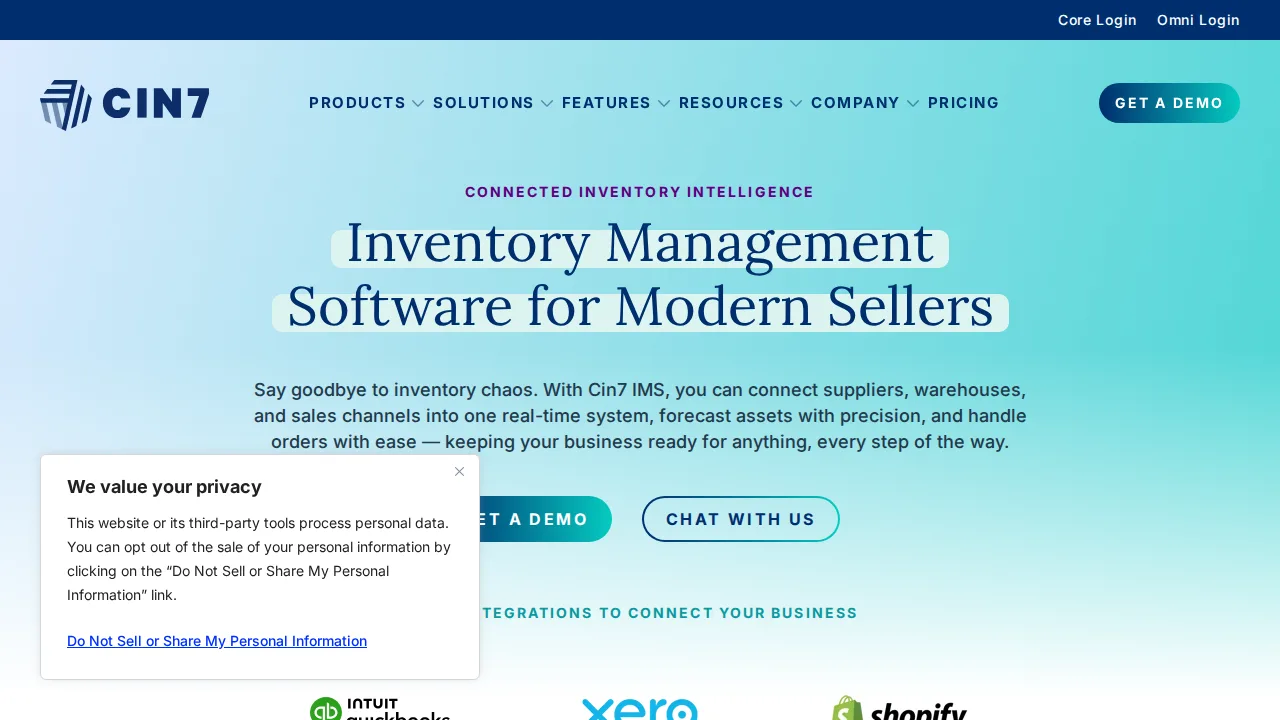
Ops note: Connect your Shopify store and one marketplace, import your SKUs, and sync a week of orders. Check stock accuracy across channels.
Site: Cin7
Fishbowl · Inventory management software
Ideal use: Warehouses and light manufacturers running QuickBooks that need barcode scanning, multi-location inventory, and work orders.
What works: Fishbowl integrates tightly with QuickBooks and adds barcode scanning, bin locations, and manufacturing work orders. Its warehouse app supports picking, packing, and receiving on mobile devices.
What breaks the deal: The desktop software feels dated, and implementation often requires paid onboarding.
Pricing: Entry: Quote. Hidden cost: Perpetual or subscription; QuickBooks integration tiered. Verify: fishbowlinventory.com/pricing.
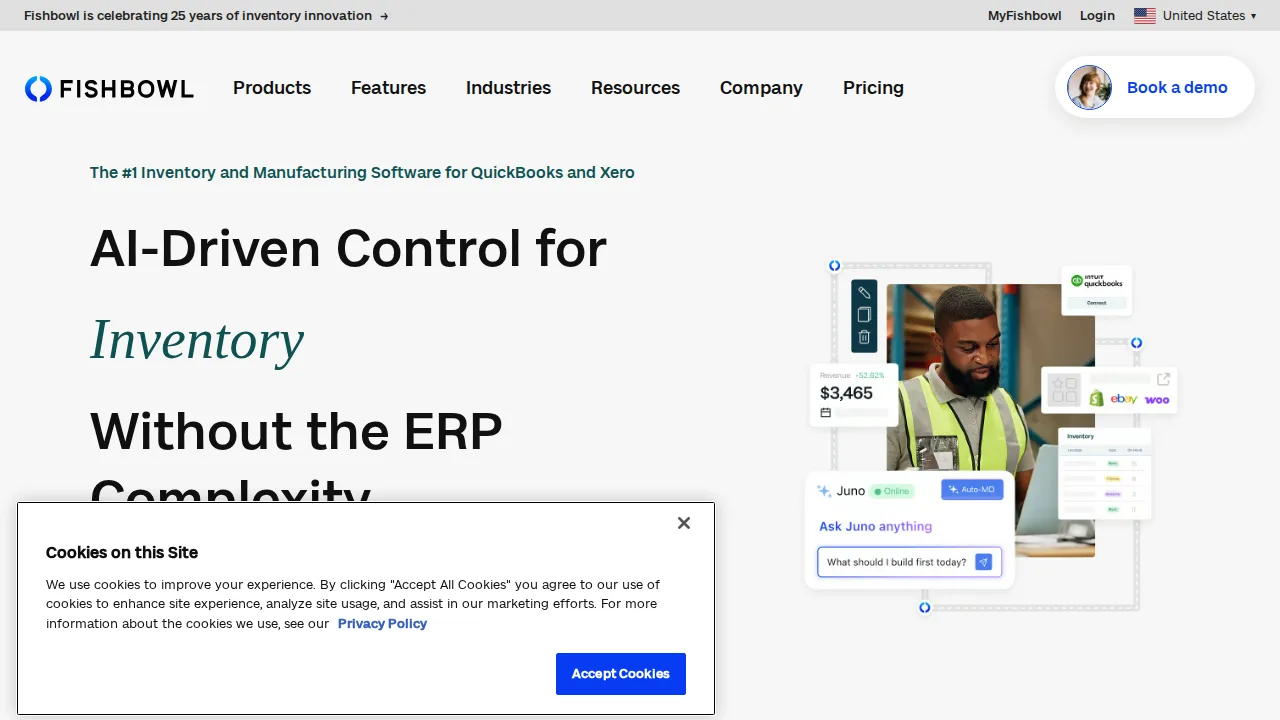
Ops note: Set up two warehouse locations with bins, scan a receipt and a pick, and sync to QuickBooks.
Site: Fishbowl
inFlow Inventory · Inventory management software
Ideal use: Small distributors and retailers that want easy inventory tracking with barcode scanning and purchase orders.
What works: inFlow Inventory is easy to learn, with barcode scanning on phones, purchase orders, and a B2B showroom for wholesale customers. Pricing tiers are clear and published.
What breaks the deal: It is less suited for large multichannel e-commerce catalogs with many marketplaces.
Pricing: Entry: $89/mo. Hidden cost: Standard 2 users; manufacturing and barcode on higher. Verify: inflowinventory.com/pricing.
Ops note: Import your SKUs, create a purchase order, and receive stock by scanning barcodes with a phone. Place a test order through the B2B showroom.
Site: inFlow Inventory
Zoho Inventory · Inventory management software
Ideal use: Small and mid-size online sellers using Zoho or Shopify that want affordable multichannel inventory and shipping.
What works: Zoho Inventory syncs stock with Shopify, Amazon, eBay, and Etsy and prints shipping labels through integrated carriers. It connects natively with Zoho Books and Zoho CRM.
What breaks the deal: Manufacturing and bill of materials features are limited compared with Katana or Cin7.
Pricing: Entry: $59/mo. Hidden cost: Professional annual; orders and warehouse limits. Verify: zoho.com/inventory/pricing.
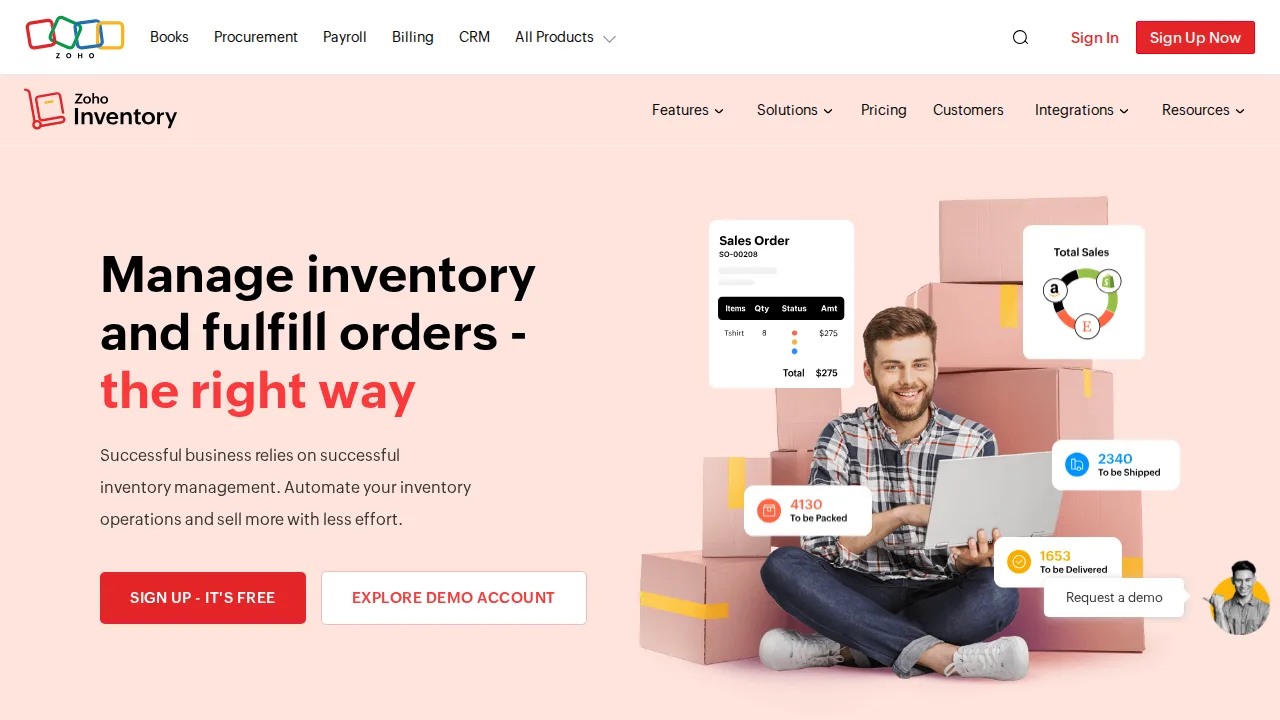
Ops note: Connect Shopify and Amazon, sync your SKUs, and ship a test order with a label. Check stock levels update on both channels.
Site: Zoho Inventory
TradeGecko (QuickBooks Commerce) · Inventory management software
Ideal use: Only former TradeGecko or QuickBooks Commerce customers researching what replaced it. Intuit shut down QuickBooks Commerce in 2023.
What works: TradeGecko was a popular wholesale and e-commerce inventory tool before Intuit acquired and rebranded it. Its B2B ordering features set a standard others copied.
What breaks the deal: The product is discontinued and cannot be purchased, so it is listed only for migration context.
Pricing: Entry: N/A. Hidden cost: Replaced by QuickBooks Commerce; legacy accounts only. Verify: quickbooks.intuit.com/commerce.
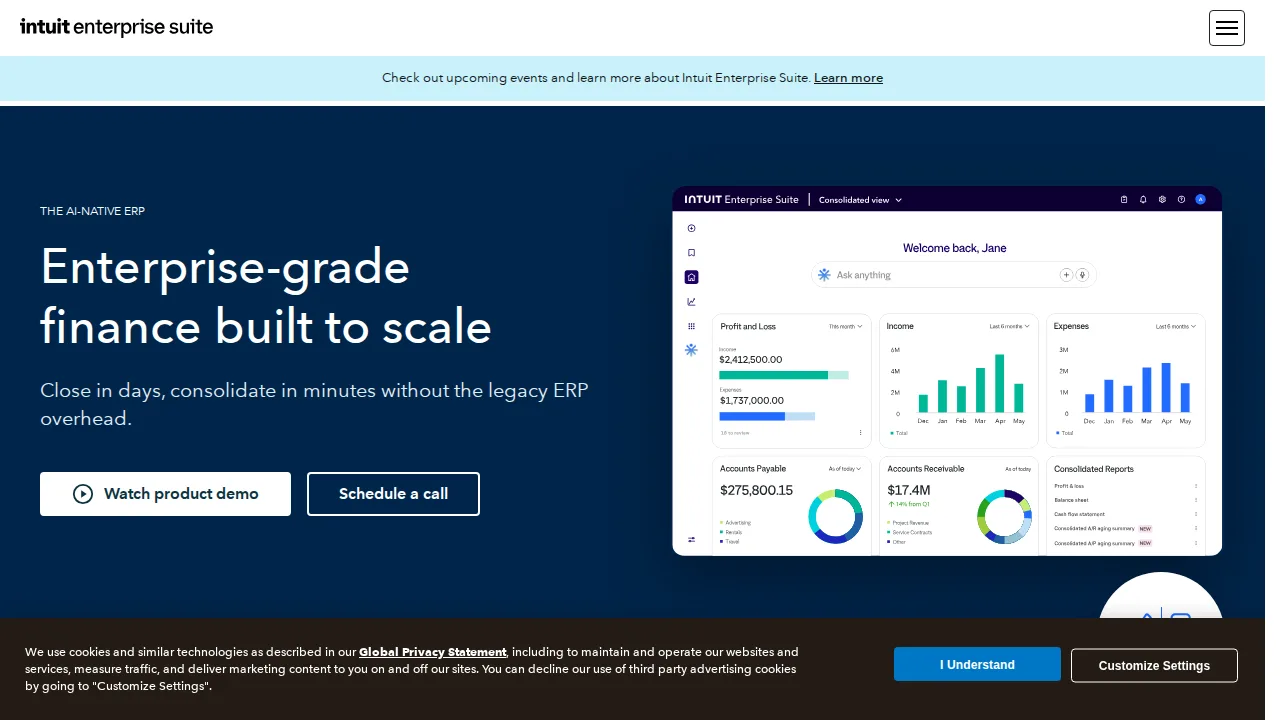
Ops note: If you were a customer, compare Cin7, Unleashed, and Zoho Inventory for a migration path. Export historical order data from any backups you still hold.
Site: TradeGecko (QuickBooks Commerce)
Unleashed · Inventory management software
Ideal use: Wholesalers, distributors, and light manufacturers that need accurate batch and serial tracking, costing, and a B2B ordering portal.
What works: Unleashed tracks batch numbers, expiry dates, and serials, and calculates landed costs so margins reflect freight and duties. Its B2B store lets trade customers place repeat orders without calling sales.
What breaks the deal: It has no built-in POS and its e-commerce integrations are thinner than Cin7, so retail-heavy brands need extra tools.
Pricing: Entry: $410/mo. Hidden cost: Wholesale 3 users; manufacturing add-on. Verify: unleashedsoftware.com/pricing.
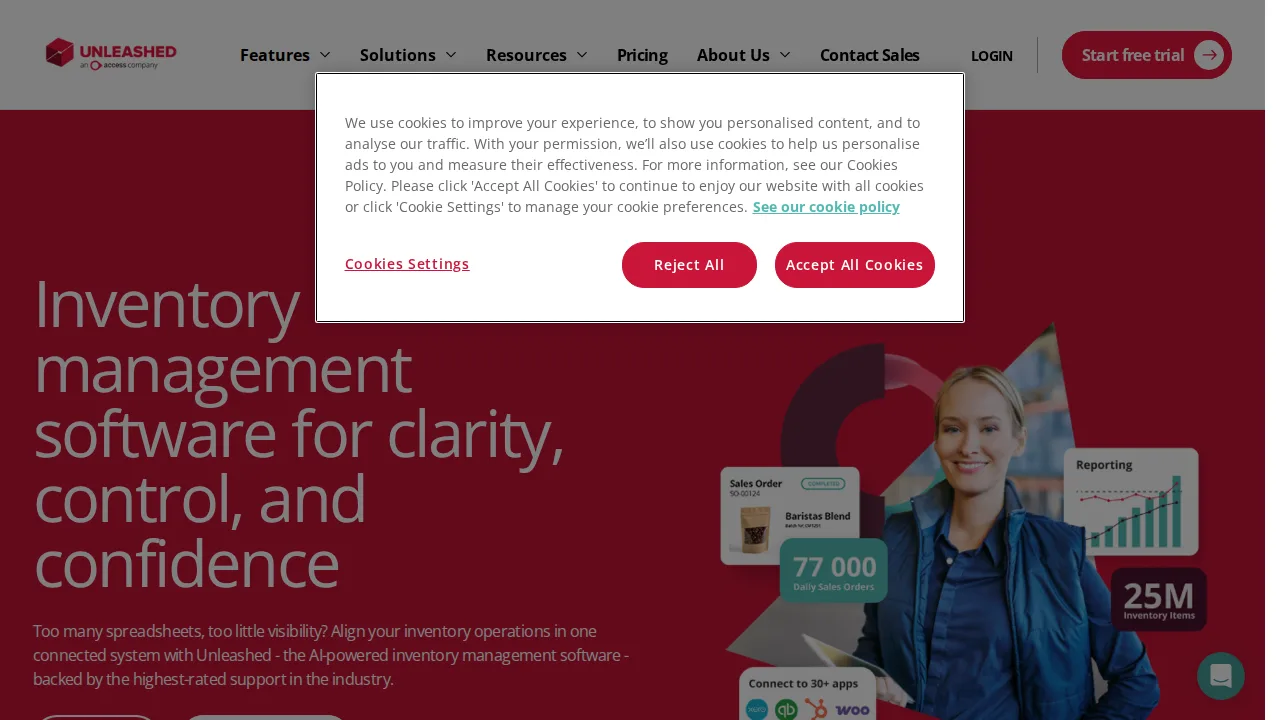
Ops note: Receive a purchase order with freight and duty costs and check the landed cost on each SKU. Place a repeat order through the B2B store as a test customer.
Site: Unleashed
Katana · Inventory management software
Ideal use: Small manufacturers and makers selling on Shopify or WooCommerce that need bills of materials, production scheduling, and live stock levels.
What works: Katana's visual production planner schedules manufacturing orders by priority and shows material shortages before you start a job. It syncs with Shopify, QuickBooks, and Xero so sales pull from real finished-goods stock.
What breaks the deal: Advanced warehouse features like bin locations and complex multi-site transfers are limited.
Pricing: Entry: $179/mo. Hidden cost: Essential annual; shop floor and API on higher. Verify: katanamrp.com/pricing.
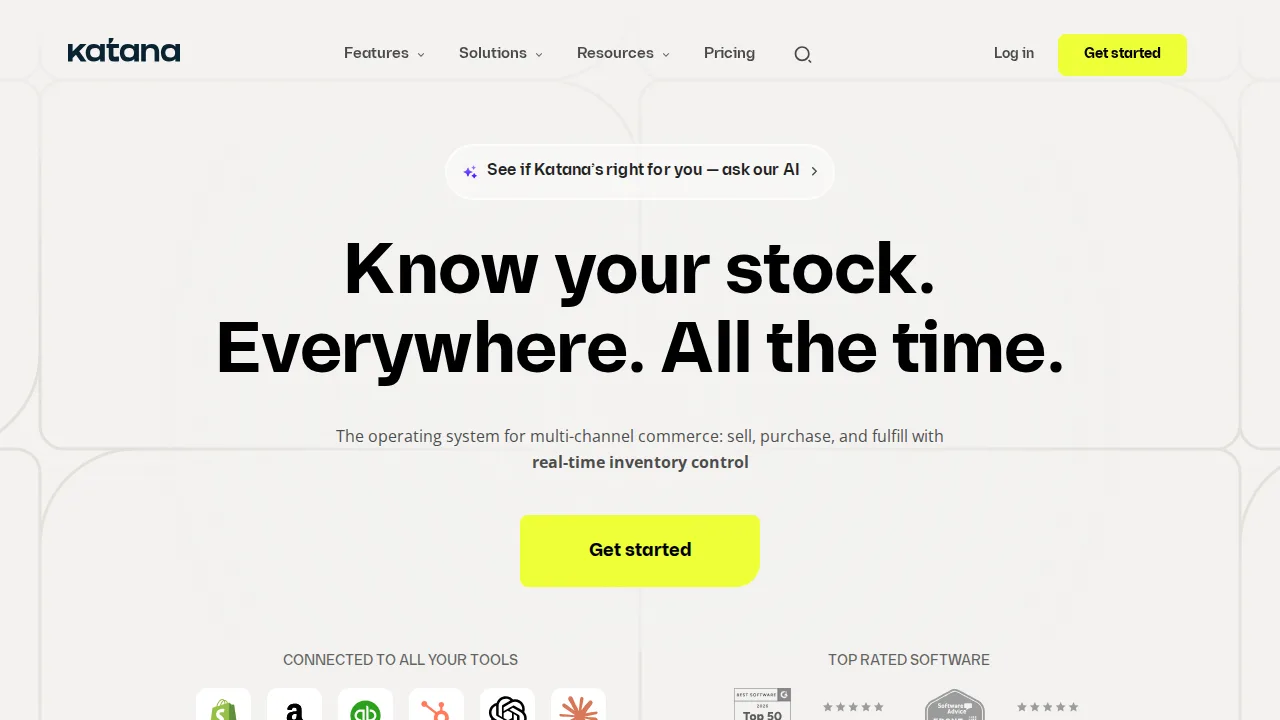
Ops note: Build a bill of materials for your best seller, create a manufacturing order, and see how Katana flags a missing component. Sync one Shopify order and check stock updates.
Site: Katana
Summary table
| Name | Best for | Entry pricing | UX /10 |
|---|---|---|---|
| Cin7 | Multichannel inventory for product brands | $349/mo | 7.5 |
| Fishbowl | QuickBooks warehouses with barcode scanning | Quote | 6.4 |
| inFlow Inventory | Easy inventory for small distributors | $89/mo | 8.2 |
| Zoho Inventory | Affordable multichannel inventory for Zoho | $59/mo | 7.7 |
| TradeGecko (QuickBooks Commerce) | Discontinued, listed for migration context | N/A | 8.9 |
| Unleashed | Batch tracking and landed costs for wholesalers | $410/mo | 8.1 |
| Katana | Production planning for small manufacturers | $179/mo | 6.6 |
Quick verdict
Cin7 is the best choice for product brands selling across retail, e-commerce, marketplaces, and wholesale from one stock ledger. Katana suits small manufacturers that need production planning and bills of materials synced with Shopify. Wholesalers that track batches, expiry dates, and landed costs should look at Unleashed.
Sync a full week of real orders across your channels during the trial and compare stock counts with a physical count. Confirm integrations with your accounting system and shipping carriers before you migrate a single SKU.
Free checks on Lagnis
Before you sign a inventory management software contract, run your numbers with finance inventory shrink cost. Same browser session, no account.
Related comparisons
- Best POS systems (2026): 7 tools compared
- Best Web hosting (2026): 7 tools compared
- Best Domain registrars (2026): 7 tools compared
FAQ
Why only 7 tools? We cut duplicate workflows; seven profiles stay readable.
Affiliate links fund hosting; listed flaws are from field testing patterns, not sponsor edits.
Pricing figures are list-tier snapshots; confirm checkout totals before you commit to annual billing.