Best E-commerce platforms (2026): 7 tools compared
An e-commerce platform decides your checkout, payment fees, app costs, and how hard it will be to grow or move later. Hosted platforms trade some control for convenience, while open-source options give you full ownership and full responsibility. Transaction fees and sales-based plan thresholds can quietly change the math as you grow. We compared seven platforms for different store sizes.
Head-to-head picks
Affiliate links may fund free Lagnis Tools; picks require a public partner program.
Seven vendors below with disclosed affiliate or partner programs. Each block: fit, strengths, blocker, pricing.
We compared checkout quality, payment and transaction fees, catalog and B2B features, app ecosystem costs, performance, and data portability. We also checked plan thresholds tied to sales volume.
Shopify · E-commerce platforms
Ideal use: Brands selling physical products online, from first store to high-volume DTC, that want hosted checkout, payments, and a deep app ecosystem.
What works: Shopify's checkout converts well and handles payments, taxes, and shipping labels out of the box. The app store and theme ecosystem cover nearly every retail need.
What breaks the deal: Apps add up quickly, and using a third-party payment gateway adds transaction fees on top.
Pricing: Entry: $39/mo. Hidden cost: Basic; 2.9% + 30¢ online card. Verify: shopify.com/pricing.

Ops note: Build a test store with five products and run an order through Shopify Payments in test mode. Price out the apps you would need for reviews, subscriptions, and email.
Site: Shopify
BigCommerce · E-commerce platforms
Ideal use: Mid-size and B2B merchants with large catalogs who want a hosted platform without transaction fees and with native multi-storefront.
What works: BigCommerce charges no transaction fees on any payment gateway, and it includes B2B features like price lists and customer groups. Headless options work with Next.js and other frontends.
What breaks the deal: Plans have annual sales thresholds that automatically push growing stores to higher tiers.
Pricing: Entry: $39/mo. Hidden cost: Standard annual; no transaction fee on BC; payment rates separate. Verify: bigcommerce.com/essentials/pricing.
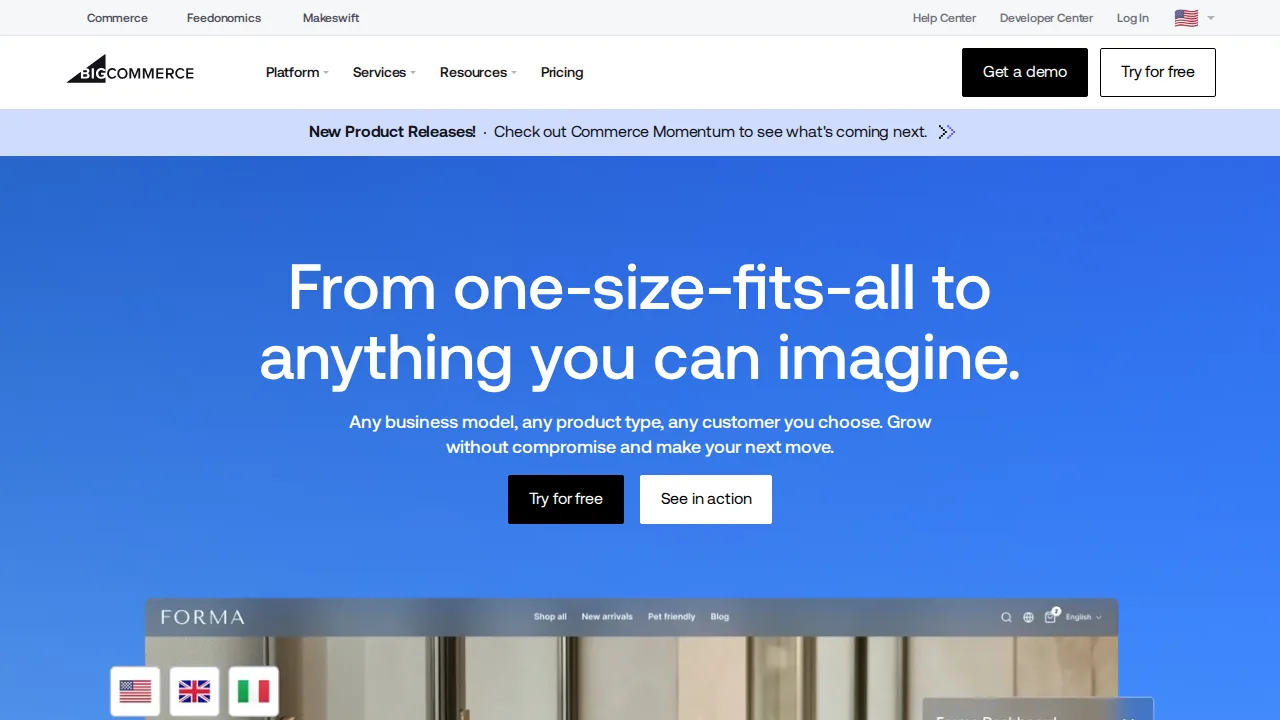
Ops note: Import your full catalog with variants and set up a B2B price list. Check which plan your trailing twelve-month sales put you on.
Site: BigCommerce
WooCommerce · E-commerce platforms
Ideal use: WordPress site owners and developers who want full control over a store and are comfortable managing hosting and plugins.
What works: WooCommerce is free, open source, and extends through thousands of plugins for subscriptions, bookings, and B2B pricing. You own your data and can move hosting whenever you want.
What breaks the deal: Performance, security, and updates are your responsibility, and premium extensions add up.
Pricing: Entry: $0. Hidden cost: Plugin free; hosting, extensions, and payment fees apply. Verify: woocommerce.com/pricing.
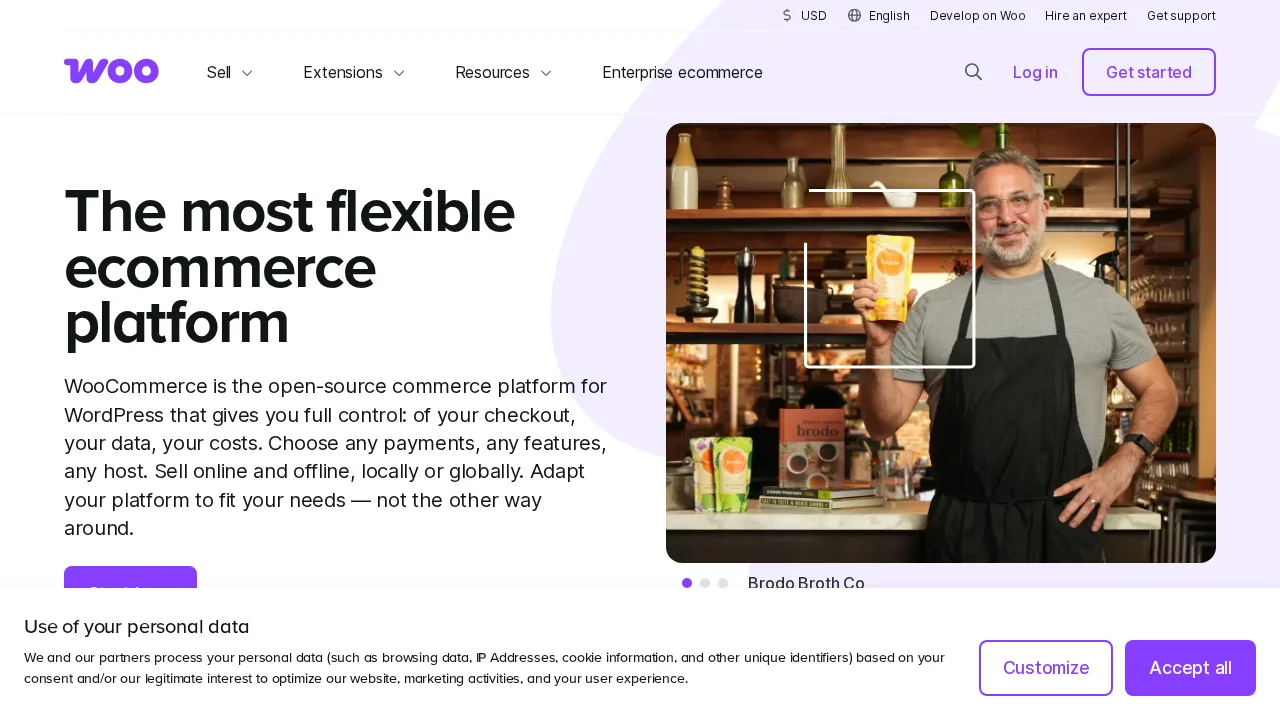
Ops note: Install WooCommerce on a staging site with your theme and top five plugins, then run a checkout test. Load-test the cart page on your hosting.
Site: WooCommerce
Wix eCommerce · E-commerce platforms
Ideal use: Small shops and makers who already have a Wix site and want to add a store with minimal setup.
What works: Wix eCommerce adds products, checkout, and abandoned cart recovery to an existing Wix site without switching platforms. Multichannel selling pushes the same catalog to Instagram, Facebook, Amazon, and eBay.
What breaks the deal: It is less suited for large catalogs, and switching platforms later means rebuilding.
Pricing: Entry: $27/mo. Hidden cost: Business Basic annual; payment fees until Premium. Verify: wix.com/upgrade/website.
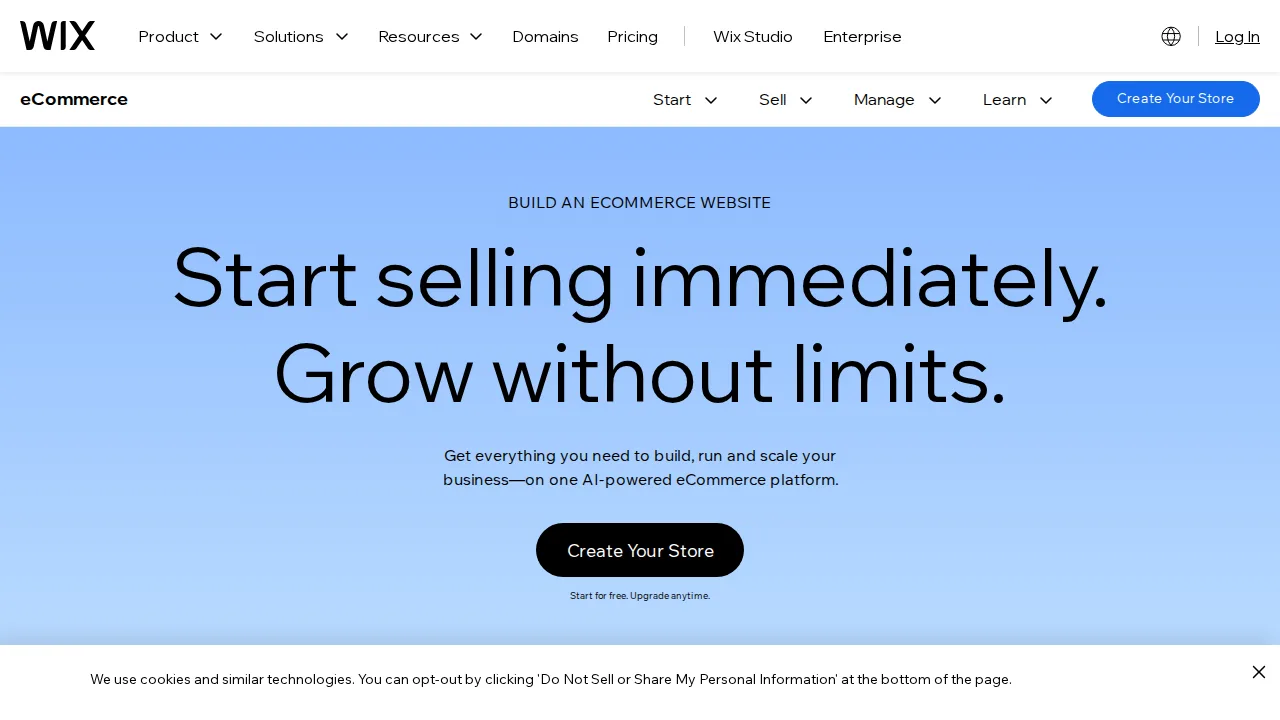
Ops note: Add ten products with variants to your Wix site and test checkout on mobile. Set up abandoned cart recovery.
Site: Wix eCommerce
Squarespace Commerce · E-commerce platforms
Ideal use: Design-focused brands and creators selling a modest catalog of products, services, or digital goods.
What works: Squarespace Commerce uses the same polished templates as its sites and handles physical products, subscriptions, and digital downloads. Built-in email campaigns and member areas cover much of what small brands need.
What breaks the deal: Payment gateway choices and third-party integrations are narrower than Shopify, which limits growth.
Pricing: Entry: $27/mo. Hidden cost: Basic Commerce annual; 3% fee on entry non-commerce plans. Verify: squarespace.com/pricing.

Ops note: Build a product page with your photos and test checkout with a subscription product. Check shipping and tax setup for your regions.
Site: Squarespace Commerce
Ecwid · E-commerce platforms
Ideal use: Businesses that want to embed a store into an existing website, blog, or social page without migrating.
What works: Ecwid, owned by Lightspeed, embeds a store widget into any site and syncs inventory across channels. A free plan covers a few products.
What breaks the deal: Design control inside the embedded store widget is limited, so it may not match your site perfectly.
Pricing: Entry: $0/mo. Hidden cost: Free 10 products; Venture $19.95; payment processing separate. Verify: ecwid.com/pricing.
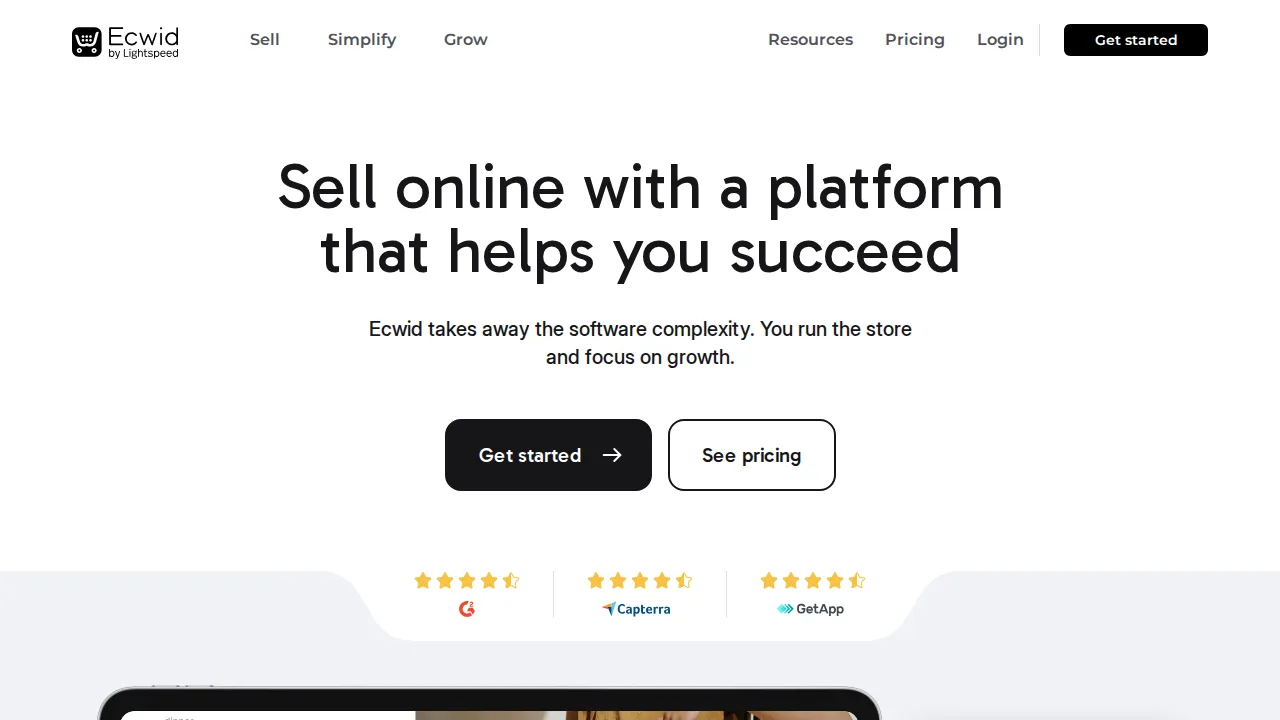
Ops note: Embed the store widget on your current site and run a test order. Check how product pages render on mobile.
Site: Ecwid
Shift4Shop · E-commerce platforms
Ideal use: US merchants who want a feature-rich store platform at no monthly fee in exchange for using Shift4 payment processing.
What works: Shift4Shop's end-to-end plan is free for US merchants processing through Shift4, and it includes many features without apps. SEO and product options are extensive.
What breaks the deal: The free plan ties you to Shift4 processing, and the interface and themes feel dated.
Pricing: Entry: $0/mo. Hidden cost: Free with Shift4 processing; paid plans if BYO gateway. Verify: shift4shop.com/pricing.
Ops note: Compare Shift4's processing rates with Stripe or Square for your order volume. Test a checkout on a theme you would use.
Site: Shift4Shop
Summary table
| Name | Best for | Entry pricing | UX /10 |
|---|---|---|---|
| Shopify | Hosted online store with top checkout | $39/mo | 6.8 |
| BigCommerce | Large catalogs and B2B without transaction fees | $39/mo | 8.8 |
| WooCommerce | Open-source store on your WordPress site | $0 | 8.9 |
| Wix eCommerce | Adding a store to a Wix site | $27/mo | 6.5 |
| Squarespace Commerce | Polished storefronts for small catalogs | $27/mo | 7.9 |
| Ecwid | Embedding a store into any site | $0/mo | 8.7 |
| Shift4Shop | Free store tied to Shift4 processing | $0/mo | 6.8 |
Quick verdict
Shopify is the best choice for most brands selling physical products online, thanks to its checkout and app ecosystem. BigCommerce suits larger catalogs and B2B sellers that want no transaction fees. WordPress owners who want full control should build on WooCommerce.
Price the apps and payment fees you will need, not just the base plan. Build a test store with real products and run a test order before migrating.
Free checks on Lagnis
Before you sign a e-commerce platforms contract, run your numbers with markup calculator. Same browser session, no account.
Related comparisons
- Best Payment processing (2026): 7 tools compared
- Best Payroll software (2026): 7 tools compared
- Best HR software (2026): 7 tools compared
FAQ
Why only 7 tools? We cut duplicate workflows; seven profiles stay readable.
Affiliate links fund hosting; listed flaws are from field testing patterns, not sponsor edits.
Pricing figures are list-tier snapshots; confirm checkout totals before you commit to annual billing.